Six dimensions for reviewing a part before design release
Review geometry, feature history, manufacturing, tolerances, reuse and serviceability before releasing a part, with AI helping organize questions and risks.
Originally published by AI驱动产品设计 on October 13, 2026. This republication preserves the original discussion and product-research context. The six dimensions are the author's proposed review framework, not an industry standard or a validated universal scoring system.
In mechanical product design, the same function can be achieved with several different parts. Experienced designers usually have more than one solution in mind. The differences can seem small during modeling, while their consequences emerge later: extra machining setups, a one-off part number, awkward screw access, or dismantling half a product to replace a failed component.
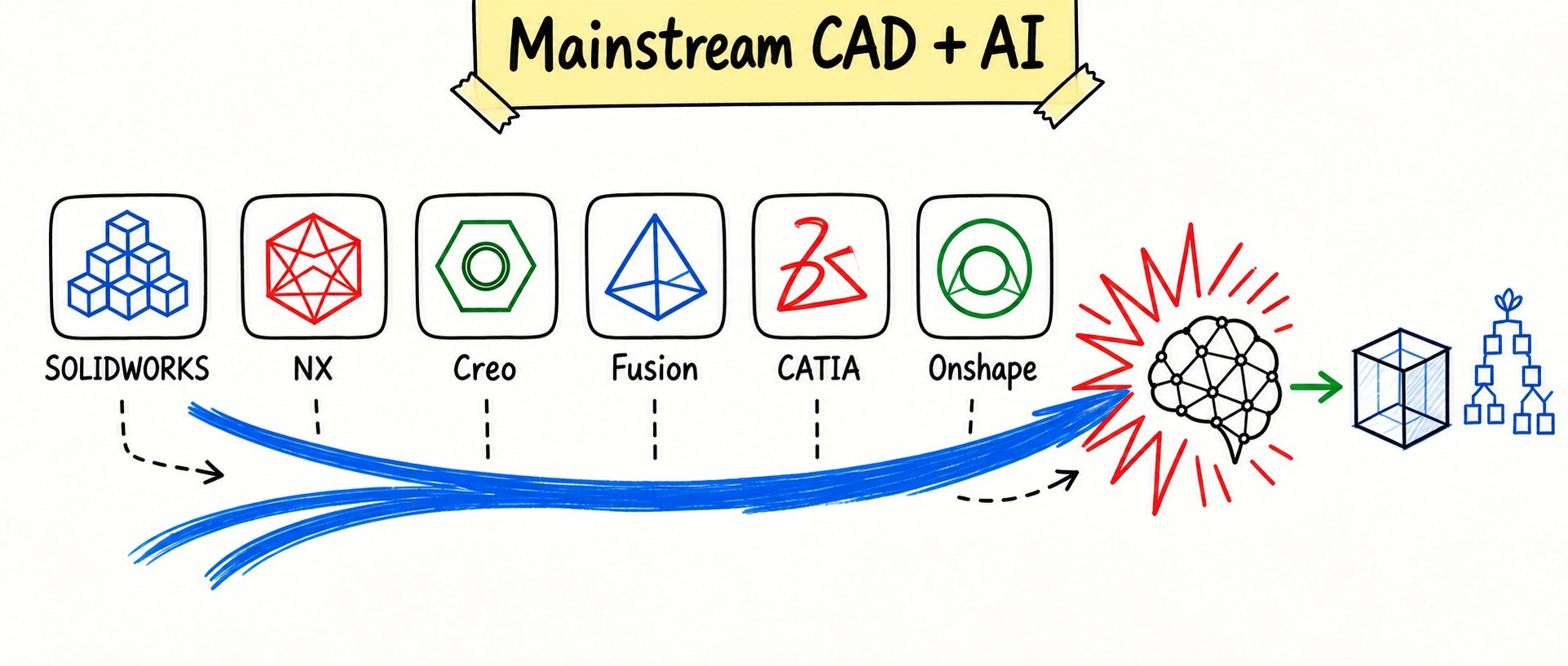
This article concerns part-level review. Design for X, or DfX, often addresses a whole product's lifecycle, including manufacture, assembly, transport, reliability and testing. Here the question is narrower: when a part modeled in SOLIDWORKS, NX or Fusion is approaching release, have we considered its costs from creation and management through assembly and maintenance? Electrical, environmental, transport, reliability and test requirements still need their own product-level reviews.
AI's role is to help work through the questions, rather than to define a new CAD-generation pipeline.
1. Six dimensions before release
Review these dimensions before deciding a design is finished. Each highlights costs that may otherwise move downstream.
- Geometric complexity — Questions to examine: Are surfaces simple? Are freeform regions, holes and slots necessary? Elaborate geometry can increase modeling, machining and revision effort.
- Modeling / feature history — Questions to examine: How many features and dependency levels are there? Can a small change destabilize many later features?
- Manufacturability — Questions to examine: How many setups? Are there undercuts, deep cavities or thin walls? Does the part require five-axis machining? These choices affect cost and lead time.
- Dimensions and tolerances — Questions to examine: How many tight dimensions or geometric tolerances are required? Excessively strict specifications can increase inspection and scrap costs.
- Standardization / reuse — Questions to examine: Could a standard component or an existing library part do the job? One more unique part number adds purchasing, inventory and maintenance work.
- Assembly and maintenance — Questions to examine: Can assembly proceed from one direction? Are tools accessible? Can a failed part be replaced without extensive disassembly?
The dimensions emphasize different issues and can interact. Research on SOLIDWORKS models has linked complicated feature histories to perceived modeling difficulty. Yet a model that is difficult to construct can still be easy to manufacture, and vice versa. That is why I would review all six rather than use one as a proxy for the rest.
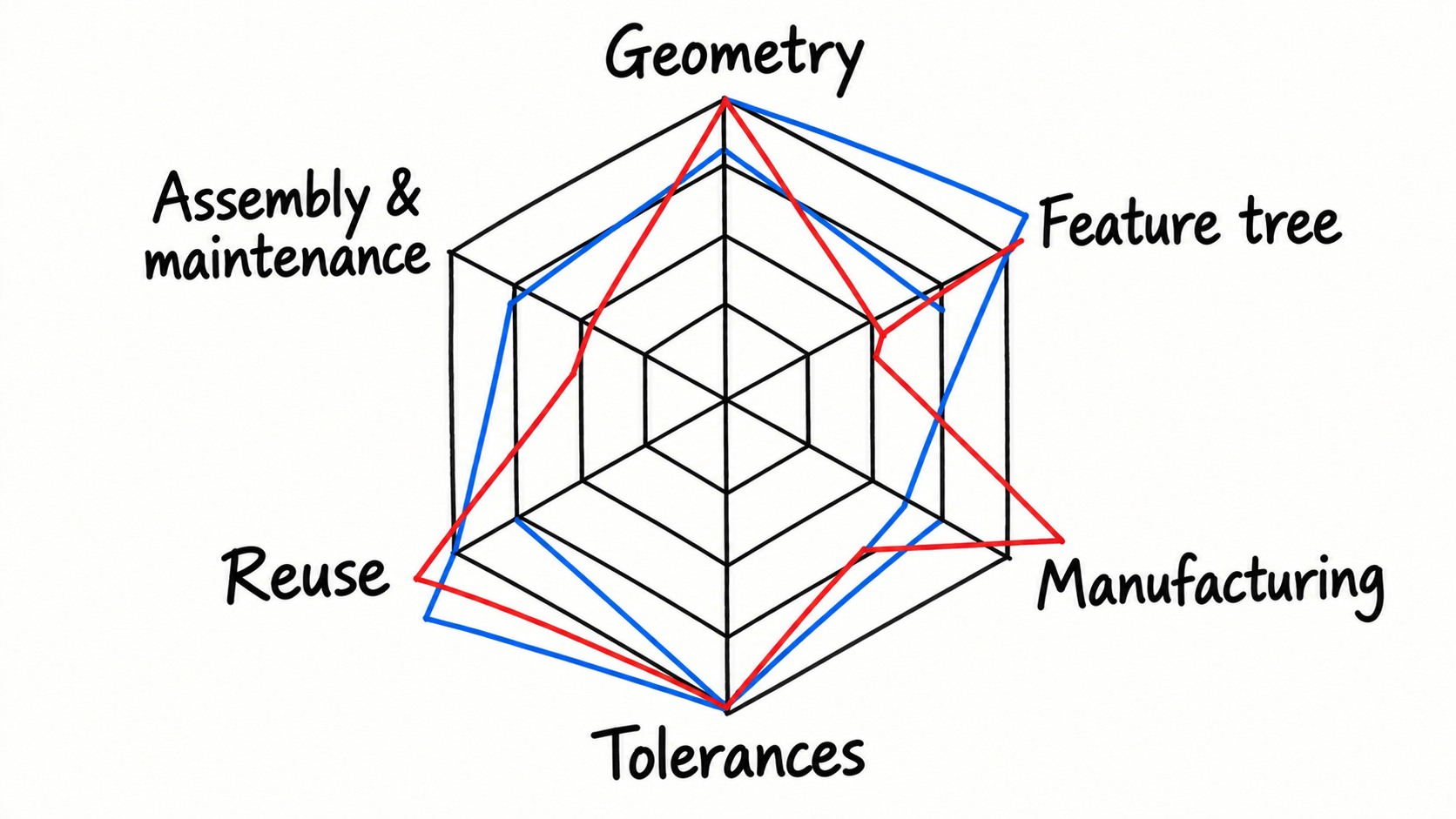
Figure 1. AI-generated conceptual radar chart comparing two hypothetical profiles. Its outlines are illustrative, not measured scores or validated weights. The six axes identify geometry, feature history, manufacturing, tolerances, reuse, and assembly/maintenance.
2. What existing tools cover
Many costing and design-for-manufacture tools reveal difficulty through cost drivers or manufacturing findings. Few organize all of these dimensions into a single review. The following is an interpretation of public product material in the original survey: ✓ indicates coverage, △ partial relevance, and — no coverage identified. It is not a comparative product test.
- aPriori — Geometry: △; Modeling: —; Manufacture: ✓; Tolerances: △; Reuse: —; Assembly / maintenance: —
- Boothroyd Dewhurst DFMA — Geometry: △; Modeling: —; Manufacture: ✓; Tolerances: —; Reuse: —; Assembly / maintenance: ✓
- SOLIDWORKS Costing — Geometry: △; Modeling: △; Manufacture: ✓; Tolerances: —; Reuse: —; Assembly / maintenance: —
- DFMPro — Geometry: △; Modeling: —; Manufacture: ✓; Tolerances: —; Reuse: —; Assembly / maintenance: △
- Protolabs automated design analysis — Geometry: △; Modeling: —; Manufacture: ✓; Tolerances: —; Reuse: —; Assembly / maintenance: —
- Toolpath — Geometry: △; Modeling: △; Manufacture: ✓; Tolerances: —; Reuse: —; Assembly / maintenance: —
- Similarity search such as CADDi Drawer — Geometry: △; Modeling: —; Manufacture: —; Tolerances: —; Reuse: ✓; Assembly / maintenance: —
- Text2CAD-Bench complexity levels — Geometry: ✓; Modeling: ✓; Manufacture: —; Tolerances: —; Reuse: —; Assembly / maintenance: —
DFMA's design-for-assembly component addresses assembly efficiency and reducing unnecessary parts. Its should-cost analysis addresses an individual part's process costs. CAD benchmark difficulty levels usually concern how hard a model is to construct; they do not establish manufacturability or assembly quality.
The reuse column is particularly sparse. Avoiding a new part number can reduce subsequent purchasing, inventory and maintenance effort. But that requires a maintained historical part library and an effective way to search it. Without those, reuse remains an aspiration rather than a design decision.
My conclusion is that reuse management, serviceability and geometry/manufacturing are rarely covered together. This checklist addresses that review gap. A single software purchase cannot substitute for an organization's part library and retrieval process.
3. How AI can help with each dimension
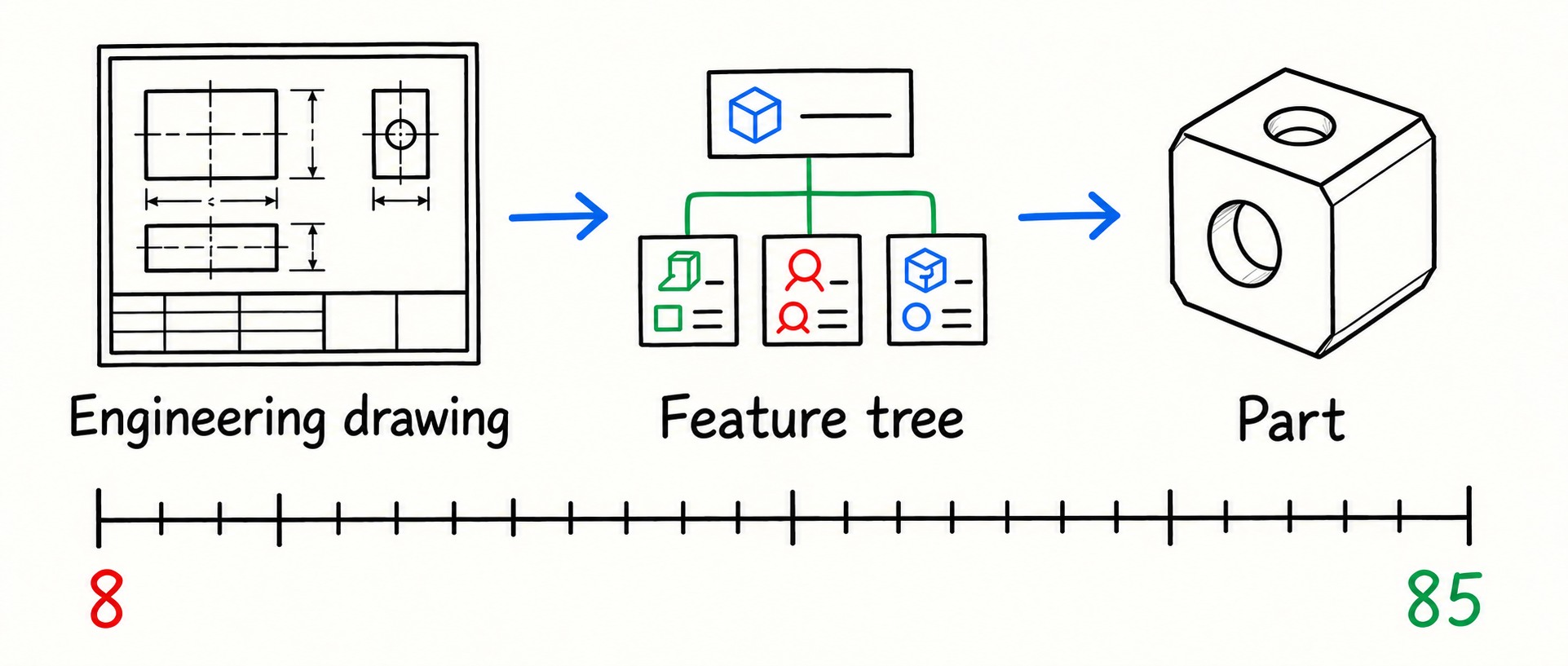
Assume the part is already modeled, or nearly finished, in a commercial CAD system. You need to decide whether to release it or revise it. Screenshots, drawings, feature-tree views and BOM notes can help an AI organize concerns and questions. Engineers and manufacturing specialists retain the decision.
Geometric complexity
Provide isometric views, important sections or a drawing. Ask whether the shape is unnecessarily elaborate, whether freeform surfaces or repeated holes and slots could be simplified, and what simpler form would preserve function. AI can identify visibly expensive-looking regions for comparison with alternatives.
Its limitation is that images do not expose actual surface continuity or real machining difficulty. Treat suggestions as prompts for review. Functional requirements, tooling and manufacturing routes determine whether complexity is justified.
Modeling and feature history
Provide a full or collapsed feature-tree view and a model image. Ask whether dependencies appear deep, whether features look redundant, and which changes might propagate through the model. AI can describe possible maintenance risks in accessible language before a design review.
It is reading an image and your description, not necessarily the true feature history. It may miss references or misunderstand operations. Refactoring the tree, suppressing a feature safely and verifying rebuild behavior still require the CAD system, reversible edits and engineering judgment.
Manufacturability
Provide principal views, wall-thickness or draft information, and available process notes. Ask about undercuts, deep cavities, thin walls, likely setups and three-axis versus five-axis access. You can also supply findings from DFMPro, aPriori or Protolabs and ask AI to translate them into possible design changes.
Neither a conversation nor a generic automated finding provides final approval of fixtures, workholding or a real quote. Confirm the manufacturing plan with process engineers or suppliers before treating the result as orderable.
Dimensions and tolerances
Provide a drawing or views identifying mating surfaces. Ask which interfaces establish function, whether datums are robust, which tight tolerances deserve review, and whether any specifications appear unnecessarily strict.
AI can help organize tolerance questions, but it does not replace tolerance engineering, geometric dimensioning and tolerancing expertise, gauges or an inspection plan. Fits, process capability and inspection costs determine the final specification.
Standardization and reuse
Provide images, critical dimensions, material and finish, plus a one-sentence function. Ask whether the part resembles a standard or purchased component and which features require a custom design. If a company library exists, run similarity search first, then ask AI to compare candidate parts and distinguish small adaptations from genuinely new requirements.
Without a library and retrieval, an assistant can only make generic suggestions to reuse. The bottleneck is access to existing designs, not the wording of the conversation.
Assembly and maintenance
Provide assembly context, surrounding obstructions and fastener directions. Ask whether assembly can proceed from one direction, whether a wrench or screwdriver can reach the joint, and how much disassembly is needed to replace a wear part. These questions can expose awkward fastening and service access early.
Screenshots often omit interference, cables and shop-floor tooling. Check the actual assembly and service process before deciding that access is adequate.
In daily work, this becomes two steps: ask the six sets of questions before part release, using relevant views and drawings; then prioritize BOM items with clear manufacturing, reuse or replacement difficulties. AI accelerates issue discovery and question organization. Workholding, tolerances, reuse and serviceability still depend on engineers, process knowledge and the organization's data.
A further possibility is to let AI read models and related information continuously, assisting these reviews as a design evolves. That is a workflow proposal; its efficiency gains need practical measurement.
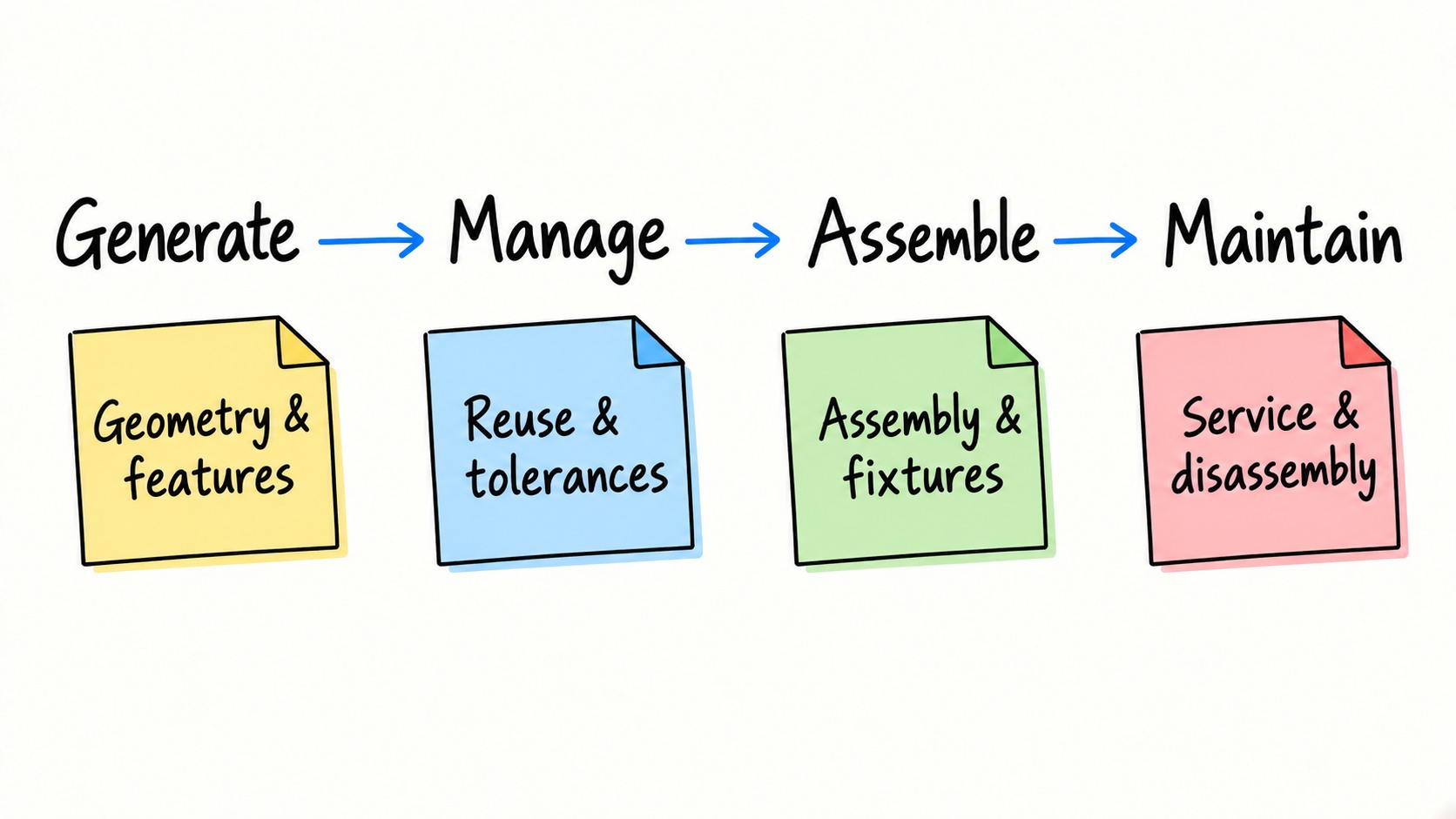
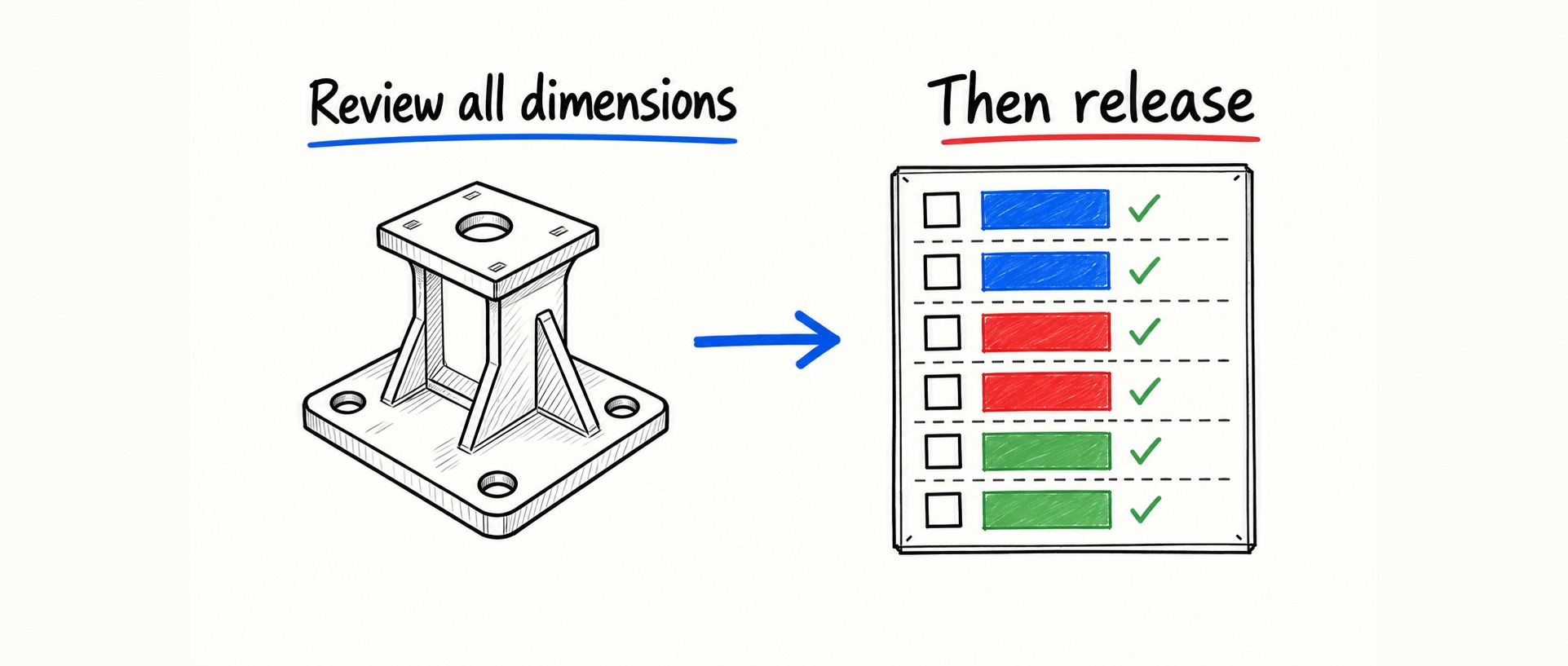
Figure 2. AI-generated concept illustration of review across creation, management, assembly and maintenance.
Related: evaluating AI CAD tools beyond their demos.
Illustrations are conceptual, not screenshots from a new product test. The English edition uses separately localized English illustrations with matching captions.
Sources & further reading
- A quantitative analysis of parametric CAD model complexity and its relationship to perceived modeling complexity ↗
- aPriori DFM severity classification ↗
- Boothroyd Dewhurst DFMA software ↗
- SOLIDWORKS Costing help ↗
- DFMPro for SOLIDWORKS ↗
- Protolabs automated design analysis ↗
- Toolpath product overview ↗
- CADDi product and retrieval overview ↗
- Text2CAD-Bench dataset card ↗