AI in CAD: the real change is in the feature tree
From generating a shape to building an editable engineering model. Understanding AI CAD starts with the gap between geometry, parameters and design intent.
Can AI shorten real engineering work: turning requirements into geometry, then keeping that model useful when requirements change? The feature tree is a good place to start.
From a shape to a modeling process
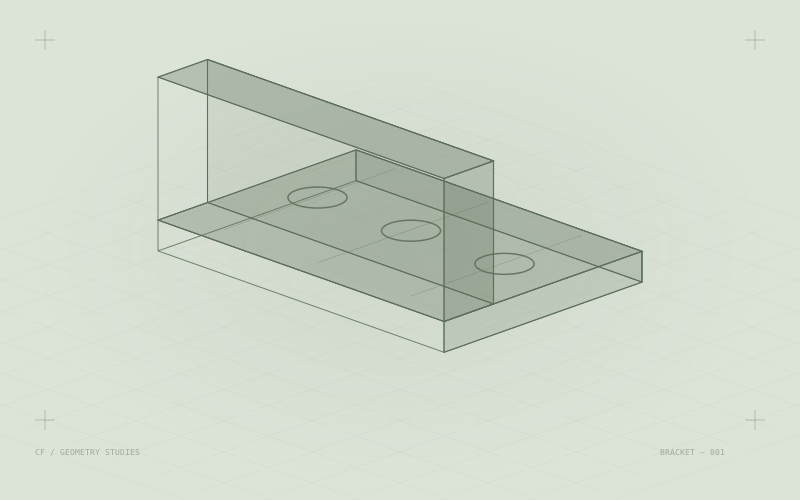
A rendering shows appearance. A mesh describes a surface. Parametric CAD also records how a model was built. Sketches, constraints, extrusions, revolutions and patterns depend on one another. When an engineer changes a dimension, the model must recompute along those dependencies.
Text2CAD explores generating sequential parametric CAD models from text. Its contribution includes making the sequence of modeling operations part of the generation target. Moving from the paper’s experimental scope to complex industrial projects still requires further validation.
Editability has to survive an edit
A simple evaluation is to change a wall thickness, hole spacing or part length, then rebuild. Check whether constraints still hold, downstream features fail or assembly interfaces survive.
This is closer to an engineer’s workflow than inspecting only the initial appearance. Similar geometry, editable parameters and correct design intent are three separate goals that need separate checks.
What we will follow
CADFrontier will track model generation, native API execution, geometric validation and human–AI collaboration. When discussing demonstrations, we will identify sources and distinguish research results, vendor claims and hands-on tests.
This is editorial analysis based on public technical material. The illustration is a conceptual geometry study created by CADFrontier.