From STEP to parametric CAD: rebuilding more than geometry
Neutral formats move geometry between systems; feature history shapes what can be changed next. The same solid can have very different modeling histories.
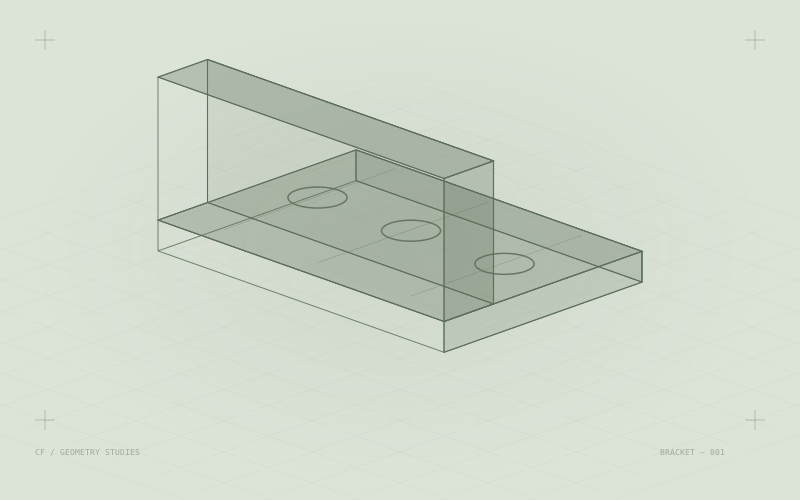
Supplier models often enter engineering workflows as STEP files. STEP helps CAD systems exchange geometry and related product information. What the recipient obtains depends on the file contents, protocol and import implementation.
Geometry exchange and history reconstruction
An imported solid can be measured, assembled and processed further. Building a feature tree closer to a native modeling experience requires identifying operations such as holes, fillets and extrusions, arranging dependencies and choosing suitable parameters.
Inferring a modeling process from a final solid usually has no unique answer. The same shape might be made with a revolution or several Boolean operations. Engineers often care most about which route makes the next change easier.
An entry point into AI reverse engineering
CAD-Recode studies recovering CAD code from point clouds. It is one way to understand the path from observed geometry to an executable modeling description. Recovering code from point clouds, recognizing STEP features and migrating history across CAD systems have different inputs and objectives.
What acceptance should include
- Geometric deviation: do volume, boundaries and critical dimensions meet requirements?
- Feature quality: are sketch constraints and parameter names clear?
- Editability: does the model rebuild after representative parameter changes?
- Delivery completeness: are parts, assembly relationships and references preserved?
This is a technical explainer, not a hands-on review of a commercial conversion tool.