How Autodesk argues for AI in design software: the Fusion blog's changing view
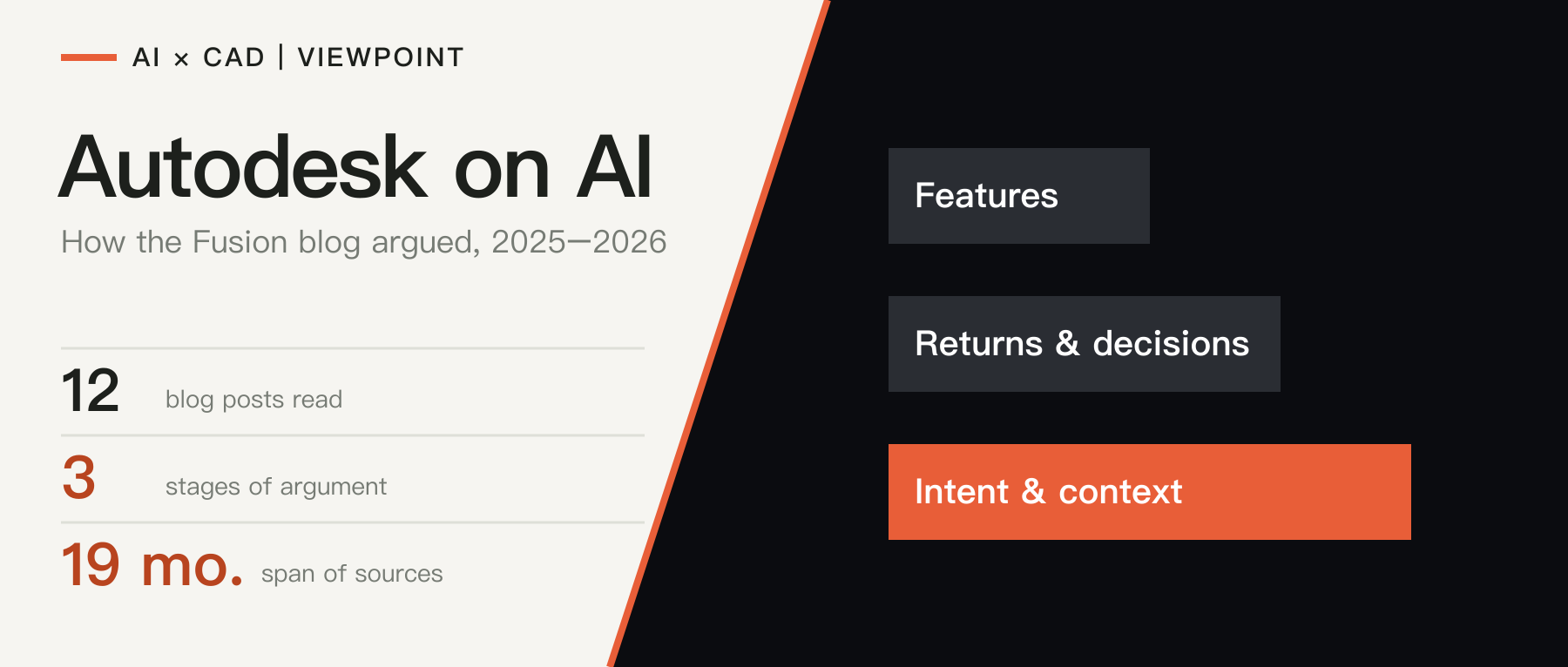
We read 12 posts on the Autodesk Fusion blog from March 2025 to October 2026 and set out its claims about AI — from tools to returns and decisions to intent and context — together with the evidence behind them and the gaps.
In this article
Autodesk has published a steady stream of articles about AI on the Fusion blog. Between 2025 and autumn 2026 their emphasis moved from putting AI into everyday tools to making AI understand a product's intent and context. This article reads 12 relevant posts on the blog from March 2025 to October 2026 and sets out Autodesk's stated views on AI in design and manufacturing software: what problem it says AI solves, what conditions AI needs, how work is divided between AI and people, and what evidence supports these claims and where the gaps are.
The article covers views only. Product features, availability and billing are outside its scope; they are covered in our earlier article Autodesk Fusion AI at a glance. Sources were checked as of October 26, 2026. All posts are vendor blogs, and the figures and effects they quote are vendor statements that we did not verify independently; we did not test any product.
1. Scope of the sources
The 12 posts are listed by date and cited below as [1]–[12].
| No. | Date | Title (summary) | Main topic |
|---|---|---|---|
| [1] | 2025-03-21 | Fusion Data Vision Toward a More Agile Product Development | Data platform, definition of AI, interfaces for agents |
| [2] | 2025-05-26 | AI Sentiment: Trends and Insights | Leaders' perception, trust and governance |
| [3] | 2025-08-13 | Challenges and Opportunities in AI Implementation in Product Design | Data, transparency, skills, culture |
| [4] | 2025-09-16 | The Autodesk AI Revolution: Transforming Manufacturing with Fusion | Why now, benefits already seen |
| [5] | 2025-12-01 | How AI in Fusion Drives Speed, Efficiency, and ROI for Consumer Product Teams | Returns, trusted AI |
| [6] | 2026-02-12 | Fusion Roadmap 2026 | Direction for the assistant, data layer, configurations |
| [7] | 2026-02-24 | AI in Manufacturing: From Buzzword to Bottom Line | How returns are framed |
| [8] | 2026-03-30 | AI in Manufacturing: How AI Is Redefining Decision-Making | Change in the decision model |
| [9] | 2026-09-07 | Intent-Driven Design in Autodesk Fusion | Expressing design intent |
| [10] | 2026-09-23 | The Next Era of Product Development: Compressing the Journey from Intent to Outcome | Connection, feedback loops |
| [11] | 2026-10-02 | Beyond the Prompt: Why Intent and Context Matter | Prompt, intent, context |
| [12] | 2026-10-07 | AI Is Finally Learning How Products Work | Product context, connected data |
2. Three stages of the argument
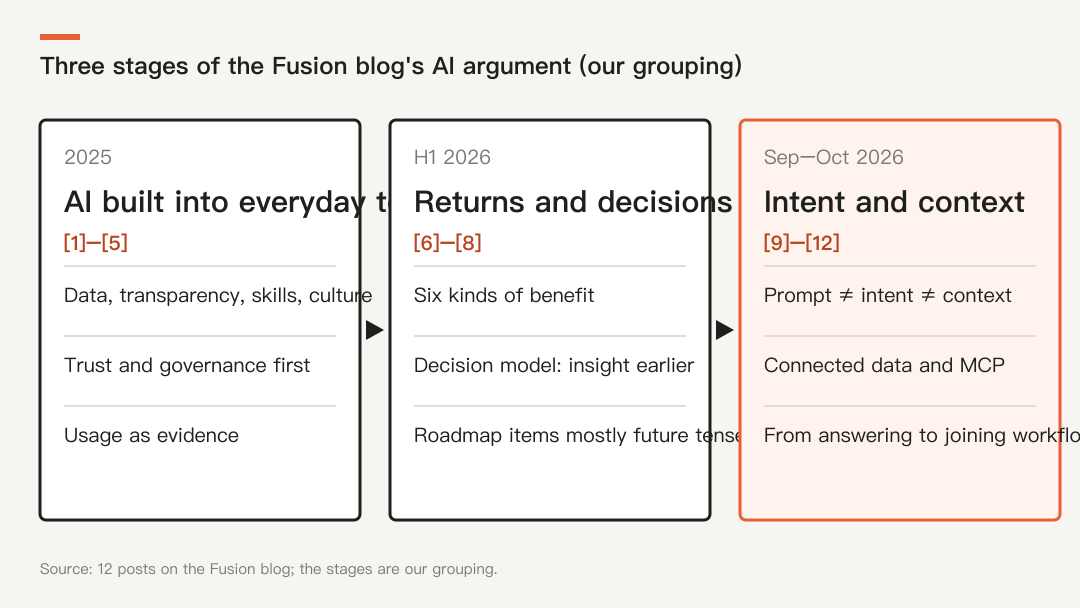
Figure 1: Our division of the emphasis of the 12 posts. The stages are our own grouping, not Autodesk's wording. Drawn by CADFrontier.
2.1 2025: AI as a feature built into everyday tools
In this stage the blog defines AI as technology that analyzes project data to give predictive insight, automates tedious repetitive tasks and supports creative exploration [1]. The argument has four points.
First, AI's value depends on whether it is embedded in the tools engineers use every day. The September 2025 post cites labor shortages, rising product complexity and faster markets as reasons to automate routine tasks, and says millions of dimensions and constraints had been applied by automated drawings and sketch auto-constraint since launch [4] (vendor statement).
Second, the blog admits four kinds of obstacle to implementing AI [3]: fragmented or incomplete data, which makes output unreliable; black-box models that are hard to validate and trace; a shortage of people who combine data science with systems integration; and resistance to automation and fear of job loss. The remedy offered is a unified platform where geometry, materials, simulation and manufacturing constraints coexist, with results validated by simulation [3].
Third, trust is treated as a precondition for adoption. The May 2025 post cites Autodesk's State of Design and Make report, saying leaders' acceptance of AI is rising and that they pay more attention to data protection, transparency and accountability, and it mentions the EU's trustworthy-AI principles [2]. The December post says Autodesk has published more than 90 AI papers on CAD and offers "AI transparency cards" explaining how each tool works, what data it uses and how it supports decisions [5].
Fourth, the early data-vision post already pointed in the later direction: its data API is graph-based, which it considers suited to agentic AI experiences, and natural-language input could improve search and task automation [1]. That post carries a safe-harbor disclaimer for forward-looking statements [1].
2.2 First half of 2026: from features to returns and decisions
The posts of February and March 2026 change the argument from what AI can do to what results it brings.
The February post states that AI creates value only when embedded in the tools engineers use every day, and groups the benefits into six kinds: shorter cycles from fewer iterations, higher first-pass yield from better consistency, fewer programming and documentation hours, fewer late-stage changes, better machine utilization and more predictable design-to-manufacture transitions [7]. It stresses built-in data management and lifecycle management so that each gain from automation is recorded and reused [7].
The March post describes a change in the decision model: traditional decisions are often reactive, with problems found at prototype, shop-floor or production stage, whereas AI moves insight earlier so teams can explore more options before committing [8]. It says design reviews will shift from "which concept do we like" to "which option gives the best business result" [8], and that AI does not replace expertise but amplifies it [8].
The 2026 roadmap of the same period states the direction as: the assistant should reduce friction and simplify common tasks; in manufacturing it should evolve into a conversational guide; the data layer should embed workflow-level AI and support agentic workflows through MCP tools and APIs [6]. Several roadmap items use the future tense, and the page carries a safe-harbor disclaimer [6].
2.3 September–October 2026: from prompts to intent and context
Four posts from September and October 2026 form a more focused argument.
[11] separates three ideas: the prompt is what you ask, the intent is what you are trying to achieve, and the context is what AI needs to understand. Its example is "optimize this bracket for manufacturing": to a standalone AI that sentence lacks the bracket's geometry, material, loads, process, tolerances, cost target and organizational standards; if the AI works in an environment that can supply them, the same sentence yields a more specific, usable result [11]. The post therefore argues that the future lies not in people becoming better prompt writers but in AI understanding the environment in which the prompt is made [11].
[11] and [12] treat connecting context as the next challenge: product information is spread across design, manufacturing, requirements and approval systems, which limits the context AI can reach, and MCP is described as a way for AI to work with tools, systems and workflows while keeping context [11]. [12] lists six kinds of information AI needs to consider — geometry, design intent, constraints, manufacturing knowledge, product history and lifecycle context — and says much of the relevant knowledge already exists in CAD files, bills of materials, drawings, PDM and PLM systems, requirements and email [12].
[10] frames the problem as a connection problem rather than an information problem, and holds that every handoff adds friction and risk: "Most manufacturers don't have an information problem. They have a connection problem." [10]. [11] goes on to widen the role of AI from an assistant that answers questions to one that takes part in workflows and coordinates a sequence of actions, listing building product configurations, modifying design parameters, generating automation logic, connecting workflows across systems and coordinating actions across tools [11].
[9] is about design intent itself: a model's geometry records only the final shape, the reasoning often exists only in the designer's head, and feature history, sketch constraints and user parameters are the means of writing intent into the model [9]. That post mainly discusses modeling method and does not discuss an AI assistant directly; reading it together with [11] and [12] is our own interpretation.
3. Premises that run through all stages
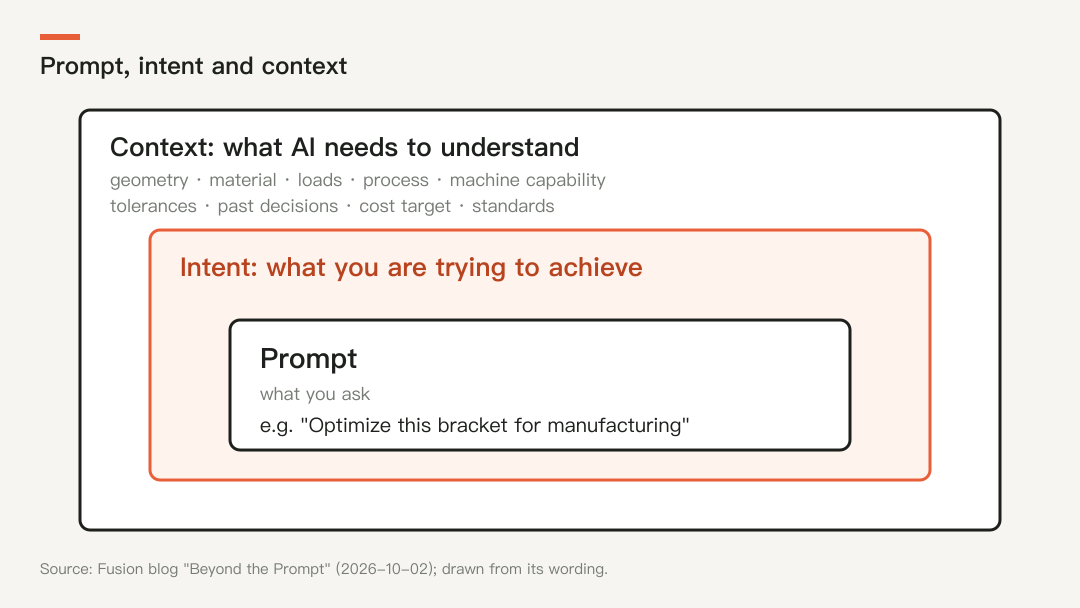
Figure 2: The three ideas distinguished in [11] and their relationship, drawn from that post's wording. Drawn by CADFrontier.
Across the three stages the blog keeps returning to three premises.
First, people keep the judgment. [8] and [12] state that AI amplifies expertise rather than replacing it, and [5] says the tools do not compromise control or creativity; [12] assigns to people evaluating ideas, making tradeoffs, validating and deciding.
Second, AI must sit inside a unified data platform. [3] lists fragmented data as the first obstacle, [7] makes built-in data management a condition for amplifying the gains of automation, and [10] and [12] treat connected product data as the basis of useful AI.
Third, value is measured by results, not by the number of features. [7] lists six kinds of benefit, [8] describes reviews in terms of business results, and [10] sums up the whole process as going from intent to outcome.
4. Observations on these claims
The emphasis of the argument moves with the product. The 2025 posts use single automation features as evidence, while the autumn 2026 posts turn to the assistant and external AI connections, and the argument turns to context and connection. We consider that the blog's narrative serves the product emphasis of the moment, so it should be read as a statement of product direction, not as independent research.
The main premise and the vendor's platform structure support each other. The blog argues that AI's value depends on a unified data platform and connected product data [3][7][10][12], and Fusion itself offers built-in data management and lifecycle management [7]. The blog mentions open data APIs and MCP for integration across tools [1][6], but does not discuss how connected a company can make a multi-vendor, heterogeneous environment.
Evidence and gaps. Across the 12 posts the quantitative data are mainly usage (millions of dimensions and constraints [4]) and the number of papers [5]; the six benefit categories [7] come with no numbers or measurement method; no failure cases, costs or comparison with working without AI are given. For the central claim that context makes AI more useful, [11] and [12] use hypothetical examples, with no evaluation. The FAQ in [12] says the usefulness of context-aware AI depends on the context it can reach and the decisions people validate, but does not say how validation is done.
Limits of the roadmap. Items in [6] such as text-to-command, generating presentations in cooperation with Microsoft, and a conversational guide for manufacturing use wording such as "will", "expected" and "evolving", and the page carries a safe-harbor disclaimer, so they should not be taken as delivered capabilities.
5. Conclusion
Autodesk's claims on AI on the Fusion blog can be summarized in three points: AI should be embedded in everyday tools rather than separate from the design process; its value depends on access to a product's intent and context, and context comes from connected data; and people remain responsible for judgment. These three points are consistent in the posts from 2025 to October 2026; what changes is the evidence, from single automation features to intent, context and connection.
Sources & further reading
- Autodesk Fusion blog: Fusion Data Vision Toward a More Agile Product Development ↗Source region: International
- Autodesk Fusion blog: AI Sentiment: Trends and Insights ↗Source region: International
- Autodesk Fusion blog: Challenges and Opportunities in AI Implementation in Product Design ↗Source region: International
- Autodesk Fusion blog: The Autodesk AI Revolution: Transforming Manufacturing with Fusion ↗Source region: International
- Autodesk Fusion blog: How AI in Fusion Drives Speed, Efficiency, and ROI for Consumer Product Teams ↗Source region: International
- Autodesk Fusion blog: Fusion Roadmap 2026 ↗Source region: International
- Autodesk Fusion blog: AI in Manufacturing: From Buzzword to Bottom Line ↗Source region: International
- Autodesk Fusion blog: AI in Manufacturing: How Artificial Intelligence Is Redefining Decision-Making ↗Source region: International
- Autodesk Fusion blog: Intent-Driven Design in Autodesk Fusion ↗Source region: International
- Autodesk Fusion blog: The Next Era of Product Development: Compressing the Journey from Intent to Outcome ↗Source region: International
- Autodesk Fusion blog: Beyond the Prompt: Why Intent and Context Matter in Design and Manufacturing AI ↗Source region: International
- Autodesk Fusion blog: AI Is Finally Learning How Products Work ↗Source region: International